What That Haze Actually Is
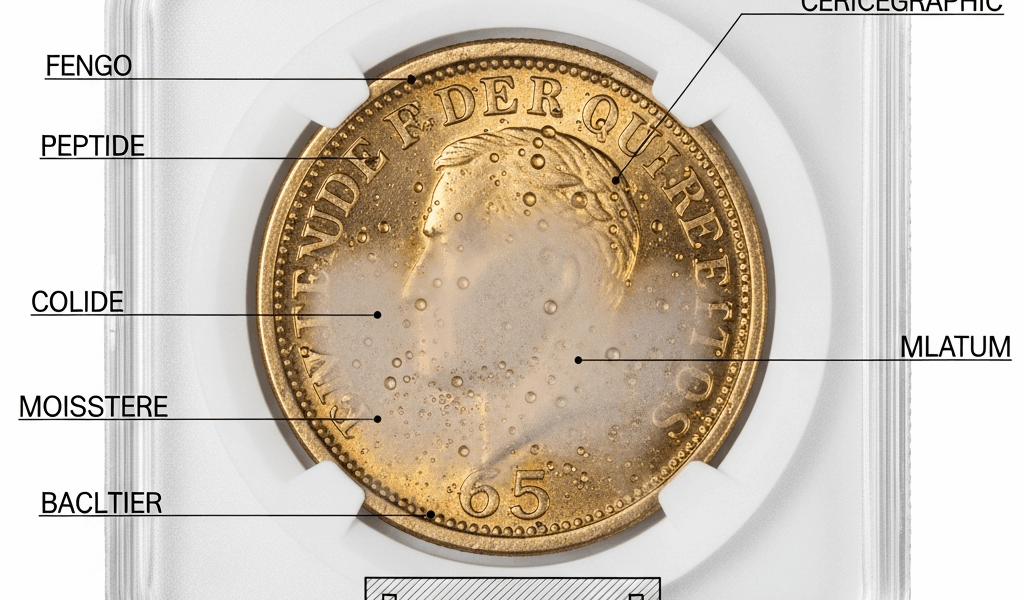
I’ve been collecting coins for twelve years now, and the first time I pulled out a certified coin and saw that milky film coating the inside of the slab, I thought I’d somehow damaged it in storage. Turned out, that haze was doing exactly what thousands of other collectors’ slabs were doing at that exact moment — nothing particularly unusual. The fogginess you’re seeing isn’t your coin deteriorating. It’s one of three things: internal condensation forming on the slab walls, residual off-gassing from older PVC-heavy encapsulation materials, or mineral deposits left behind from coin cleaning or environmental exposure.
Condensation inside a slab looks like bathroom mirror fog. It forms when temperature swings create moisture that has nowhere to escape — water vapor condenses on the acrylic or plastic interior. I watched this happen to a 1964 Kennedy half-dollar after moving it from a climate-controlled office to my home’s living room during winter. A coin stored in your cool basement gets brought upstairs to warmer air, and boom.
PVC off-gassing is a slower villain. Older slabs from the 1980s and 1990s sometimes used PVC-adjacent materials for the holder itself. Over years, those materials break down and release volatile organic compounds — that smell you get when opening an old slab? That’s exactly it. Those vapors condense into a milky residue on the inside surfaces. It’s not the coin’s fault. The holder brought this on itself.
Then there’s mineral residue. If you’ve ever cleaned a coin — even gently — or stored it in a humid environment before slabbing, trace minerals from water or cleaning solutions can leave behind a thin, sometimes spotty film. This one’s harder to see moving around, but it stays in one place and doesn’t change with temperature. Doesn’t budge, no matter how much you tilt the slab.
How Humidity Gets Trapped Inside Your Slab
Encapsulation is supposed to protect coins by sealing them away from external moisture. It works. Until it doesn’t.
Factory-slabbed coins from major grading services — PCGS, NGC, CAC — use high-pressure sealing equipment that creates an airtight, temperature-resistant bond in controlled environments. You see significantly fewer humidity problems with coins fresh from professional slabs compared to coins you’ve stored yourself. The difference is noticeable.
The trouble starts with air pockets. Even professional slabs contain microscopic gaps — unavoidable with current manufacturing technology. When a slabbed coin experiences temperature swings, going from your climate-controlled house to a hot attic or sitting in a car during summer, air inside the slab expands and contracts. Those tiny gaps let moisture slip in during the expansion phase. Then when the slab cools, the air contracts, trapping that moisture inside.
I made a mistake with a collection I kept partially in my garage. Garage temperatures swing 30 degrees Fahrenheit between winter mornings and afternoon heat. Within three months, I had hazing in four slabs — a 1966 quarter, two Roosevelt dimes, and a Susan B. Anthony dollar. It wasn’t catastrophic damage, but it was visible, and it taught me that location matters more than most collectors realize.
PVC-heavy holders are worse. Older encapsulation materials are porous by modern standards. They breathe. Humidity moves through them freely. A coin stored in a 1985-era slab in an average humidity environment will eventually develop condensation because those holders don’t maintain the seal integrity that modern acrylic slabs do.
Relative humidity above 50% is the danger zone. If your storage area sits at 60–75% humidity regularly — which is common in basements, older homes, or areas near water — you’re actively feeding moisture into any slab with imperfect sealing. The longer the coin sits, the more humidity diffuses inward. It’s a slow process, but it happens.
Is Your Coin Damaged or Just the Slab
This is the panic question. Let me settle it directly: in most cases, you have a slab problem, not a coin problem.
Here’s how to tell. Tilt the slab side to side. If the haze shifts and moves with gravity, it’s liquid condensation or vapor inside the encapsulation — that’s trapped humidity, not coin damage. Your coin underneath is fine.
If the haze stays fixed to one spot and doesn’t move no matter how you angle the slab, you’re looking at either mineral residue or PVC off-gassing residue on the slab interior itself. Still not the coin. The coin is protected underneath that layer of plastic.
Now, if you can see the haze is actually on the coin surface itself — if it’s between the coin and the slab interior, visible right on the metal — that’s different. But even then, in 95% of cases, this is mineral or PVC residue that accumulated before slabbing, not active corrosion happening inside the sealed slab. The coin isn’t deteriorating in real time.
A truly damaged coin shows discoloration patterns, spotting, or corrosion that spreads. Hazing is usually uniform or cloud-like. Corrosion is spotty, dark, and progressive-looking. The difference is obvious once you’ve seen both.
If your coin is a rare date worth four figures or more, get a second opinion from your grading service. They’ll tell you whether the coin itself needs re-evaluation. But for most collector-grade coins, internal slab haze is cosmetic frustration, not disaster.
What You Can (and Cannot) Do About It
You cannot open a slabbed coin safely. I need to be direct about this because I’ve seen collectors try, and it never ends well.
Prying open a slab — especially professionally graded slabs — risks destroying the coin’s holder credentials and potentially damaging the coin in the process. You also immediately void any resale value that depends on that slab’s authenticity. If you pop open a $3,000 coin in a PCGS holder, the holder is now worthless, and your coin is now unverified. You’ve made a financial mistake.
The honest path forward depends on how bothered you are by the haze.
If it’s mild and the coin is common — bulk commodity bullion, for example — leave it. The haze is cosmetic. The coin is sealed and protected. Document it with a photo for your records and move on. Don’t waste mental energy on something that doesn’t affect the coin.
If the coin is graded, rare, or expensive, consider re-slabbing. Submit it to the same grading service that originally slabbed it — or a competing service. They’ll remove the old slab, assess the coin fresh, and provide new encapsulation. Cost runs $25–$50 depending on the service and coin value. For a rare coin worth hundreds or thousands, this is reasonable insurance. You get a fresh, clear slab. The haze disappears. Your coin gets a modern seal.
Going forward, prevention is everything. Use silica gel packets rated for your storage environment. A 500-gram packet works for about 30 cubic feet of enclosed space. Replace them every 6–12 months. Store coins in airtight, desiccant-equipped storage boxes, not open shelves. Never store slabs in basements, attics, or garages where humidity and temperature swing freely. Keep collection storage at 40–50% relative humidity and 65–70 degrees Fahrenheit if possible.
Probably should have opened with this section, honestly. Prevention costs almost nothing and saves you the frustration of dealing with haze-covered slabs months or years down the line.
Prevention Checklist for Your Collection
- Storage environment: Keep coins in a climate-controlled area — bedroom closet, interior cabinet, or dedicated collector’s safe. Avoid basements, attics, garages, and rooms with exterior walls exposed to temperature swings.
- Humidity monitoring: Invest in a basic digital hygrometer ($15–$30). Check it weekly. Your target is 40–50% relative humidity. If you consistently read above 55%, you need active dehumidification or a different storage location.
- Silica gel or desiccant packets: Use them in every storage container. Buy bulk packs from hobby or photography suppliers — much cheaper than retail coin-storage premiums. A 500-gram packet costs $3–$8 and protects 30 cubic feet for 6–12 months.
- Airtight containers: Store slabs in rigid plastic boxes with gasket seals, not open display holders. Airtight prevents external humidity from reaching coins during temperature swings.
- Temperature stability: Maintain 65–70 degrees Fahrenheit year-round if possible. Temperature fluctuations are as problematic as high humidity — a 20-degree swing over 24 hours will pump moisture into imperfectly sealed slabs.
- Inspection intervals: Check high-value coins every 3–6 months. Look for new haze, color changes, or spotting. Catching issues early lets you decide on re-slabbing before they worsen.
- Slab type matters: Modern PCGS and NGC slabs hold seals better than old PVC-adjacent holders. If you’re buying coins in vintage slabs, assume re-slabbing may be necessary within a few years.
- Avoid direct sunlight: UV fading isn’t related to haze, but it’s real. Store coins in opaque boxes or dark cabinet spaces.
Hazing inside a slab is frustrating, but it’s rarely catastrophic. Most of what you’re seeing is a slab problem, not a coin problem. The coin inside is protected and intact. Focus your energy on preventing it in new purchases and considering re-slabbing only for valuable pieces where the cost makes sense. Your collection will be stronger for it.


Stay in the loop
Get the latest collectors coin corner updates delivered to your inbox.