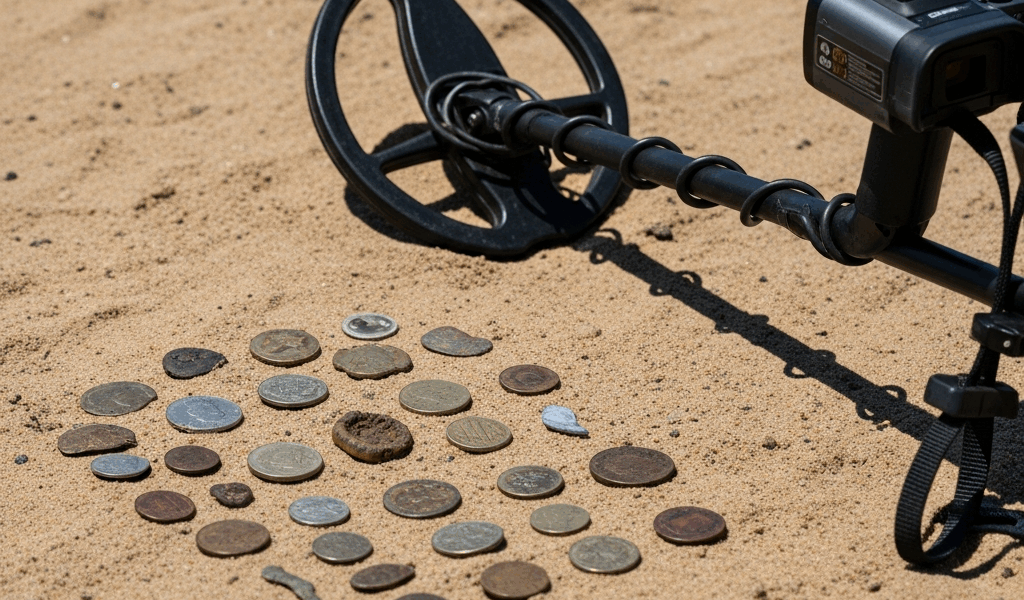
Garrett ACE 400 vs 300i for Coin Hunting
Coin hunting has gotten complicated with all the spec-sheet noise flying around. As someone who’s swung both the ACE 400 and the 300i across parks, tot lots, and older residential sites, I learned everything there is to know about what actually separates these two machines in the dirt. Today, I will share it all with you.
You’re probably sitting in the $200–$350 range right now, staring at a $60–$80 price gap and wondering if it means anything real. Short answer: it depends entirely on where you hunt. Not on detecting in general — on coins specifically. That distinction matters more than most people admit before buying.
ACE 300i vs 400 — What Actually Differs
But what is the hardware gap between these machines? In essence, it’s narrower than Garrett’s marketing suggests. But it’s much more than that when you’re standing over a trashy iron-choked park at hour two of a hunt.
Here’s what’s genuinely different between them:
- Operating frequency: The ACE 400 runs at 10 kHz. The 300i runs at 8 kHz. That extra 2 kHz nudges sensitivity upward on low-conductivity targets — thin silver dimes, small jewelry, that kind of thing.
- Discrimination segments: Twelve on the 400. Eight on the 300i. More segments, finer control — meaning you can notch out pulltabs without accidentally killing your coin response.
- Iron Audio: The 400 has it. The 300i doesn’t. Spec sheets always undersell this one.
- DD coil compatibility: Both accept aftermarket coils, but the 400 ships standard with the 8.5×11 PROformance coil and tends to pair better with DD coils in the field — cleaner target separation when the ground gets ugly.
For coin hunters specifically, the segment count and Iron Audio are the only differences worth losing sleep over. That’s what makes these two features endearing to us coin hunters. Everything else is noise.
Coin Depth and Target ID Accuracy in the Field
Probably should have opened with this section, honestly — depth and ID accuracy are the whole ballgame when coins are the goal.
On clad — modern quarters, dimes, nickels — both machines handle the 4–6 inch range fine in average soil. I pulled a 1965 Roosevelt dime at 5.5 inches with the 300i on a manicured schoolyard. Clean signal, no drama. The ACE 400, running at 10 kHz, starts pulling ahead on smaller silver targets. Pre-1964 Mercury dimes at 7 inches in moderately mineralized ground — that’s where I noticed the 400 locking in a more repeatable tone and a target ID number that didn’t bounce around as much.
Frustrated by missed silver at a hunted-out city park near my house, I started leaning almost entirely on Iron Audio to cherry-pick targets rather than digging every promising number. Iron Audio lets you hear the low iron grunt bleeding through even when the display reads coin-range — so a bottlecap masking a silver coin sounds different than a clean coin signal. That acoustic layer changes how you hunt. The 300i doesn’t offer it. You’re reading the meter and making a binary dig-or-don’t call, every single time.
Ground balance is worth mentioning here too. Both machines use fixed ground balance — no manual, no auto. Low-mineralization soil? Non-issue. Red clay, black sand, heavily mineralized ground in older neighborhoods? Fixed ground balance costs you depth. Probably 1–2 inches compared to a properly balanced machine. Neither the 300i nor the 400 solves this. They’re equal on this weakness. Know it going in.
Where the ACE 300i Still Holds Its Own
The 300i is not a compromised machine. At $229–$249 street price, it handles clean parks and schoolyards with real competence. Rural fairgrounds, old church lawns, suburban parks that haven’t been hammered by every detectorist in a 20-mile radius — the 300i finds coins at those sites. Consistently and without fuss.
I’m apparently someone who over-complicates new gear, and the 300i works for me at simpler sites while the 400 never stopped feeling like overkill at my local low-trash county park. Don’t make my mistake of assuming more features automatically means more coins.
Newer detectorists especially — the 400’s extra features can actually slow down your learning. Iron Audio is only worth having once you’ve logged enough time to recognize what iron bleed actually sounds like. Hand a beginner the 400 and they’ll likely dig more holes, not fewer. More audio information reads as more exciting signals at first, not more data to filter out.
Casual weekend use also favors the 300i. Hunting two or three times a month, hitting the same clean neighborhood park — that extra $70 doesn’t compound into more coins. The site dictates the returns. Not the extra discrimination segment.
The 300i is also marginally lighter to carry. Not dramatically. But over a three-hour hunt, small things become real things.
When the ACE 400 Is Worth the Extra Cost
Urban parks. That’s the short answer. So, without further ado, let’s dive in on why that’s true.
Chicago forest preserves. Philadelphia neighborhood parks. Older city squares that have been accumulating iron trash since the 1940s. These are the sites where coins live — and also where the 300i starts running out of answers. Rusted nails, bottle caps, steel pull-rings, old fence hardware sitting at every depth. The 300i reads through that chaos and gives you a number. The 400 gives you a number plus an audio story about what’s actually under the coil.
The 400’s 12-segment discrimination paired with Iron Audio changes how you work those sites. You’re not chasing display numbers — you’re listening to how the machine responds as the coil crosses the target. Mixed iron grunt on an otherwise coin-range signal tells you something the 300i simply cannot communicate.
Hunted-out sites are the other case. Easy shallow coins at a well-known park? Long gone. You’re hunting missed targets at depth, or coins sitting adjacent to iron that earlier detectorists passed over entirely. This new layer of audio information took off for me several years into detecting and eventually evolved into the skill set serious coin hunters know and rely on today. Better target separation and Iron Audio together mean you find coins the 300i user walked past an hour earlier.
The math is direct: hunting parks with visible trash, older urban sites, any ground with significant iron content — buy the ACE 400. The price gap pays for itself inside the first few hunts when you’re pulling wheats instead of bottlecaps.
Which One Should You Buy for Coin Hunting
Two clear paths:
- Buy the ACE 300i if you’re hunting clean, low-trash parks and schoolyards, you’re brand new and still building an ear for audio signals, or you’re detecting casually a few times a month without a hard silver-hunting goal driving you.
- Buy the ACE 400 if you’re hunting urban parks loaded with iron trash, you’ve logged at least a full season and can actually interpret complex audio response, or you’re targeting older sites where coin-to-junk ratios are genuinely brutal.
One thing worth saying plainly: neither machine competes with multi-frequency detectors once you push past the $500 mark. The Minelab Vanquish 540 runs simultaneous multi-frequency. The Garrett ACE Apex does too. Both handle mineralized, trashy ground at a level the ACE series cannot touch. If your budget stretches there, that’s your upgrade path — but that’s a different article entirely.
Between these two machines, at this price point, the ACE 400 is the better coin hunting tool for anyone past the pure beginner stage hunting real-world sites. The 300i isn’t a bad machine. It’s just a machine that runs out of answers faster when the ground gets complicated — and complicated ground is where the interesting coins always seem to be hiding.




Stay in the loop
Get the latest collectors coin corner updates delivered to your inbox.