“`html
Why Your Coin Slab Feels Sticky After Storage
You’ve pulled your coins out of storage and noticed something unsettling—the slab feels tacky to the touch, like someone wiped it down with a weak adhesive. That sticky feeling? It’s real, and it’s not your imagination or dust settling on the surface. As someone who’s handled hundreds of slabbed coins across different grading companies and storage conditions over the years, I can tell you this happens way more often than the major grading companies want to admit.
Here’s the thing: adhesive degradation inside the slab itself is the primary culprit. This isn’t about how you stored the coin—that’s not where the blame lies. It’s a materials problem baked straight into the construction of the holder.
What Causes That Sticky Feel on Your Slab
Coin slabs are assembled using three main adhesive components. You’ve got polyester-based tape seals, acrylic adhesive layers, and sometimes vinyl-based sealants. These materials have a shelf life, though manufacturers don’t exactly advertise it that way.
Heat and humidity cycles? They break down the adhesive molecules. Temperature fluctuation is the real accelerant here. A slab stored in a basement that ranges between 55°F in winter and 75°F in summer undergoes constant stress—expand when warm, contract when cool. After enough cycles—sometimes just 18 months—the polymer chains in the acrylic or polyester begin falling apart.
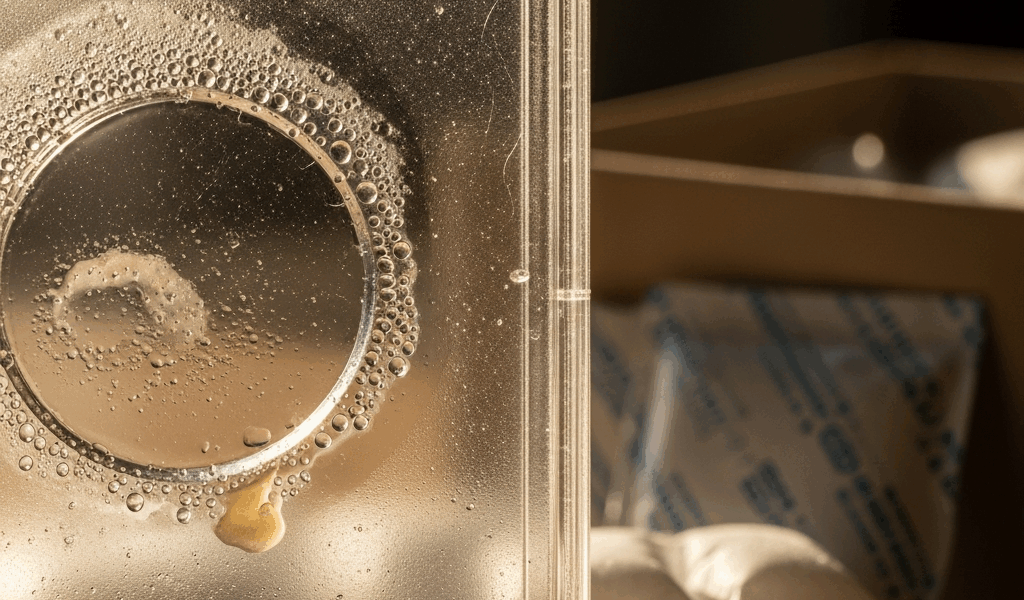
High humidity accelerates this dramatically. Once you hit 60% relative humidity and above, water molecules infiltrate the adhesive layer. The acrylic softens. Off-gassing begins—the adhesive literally vaporizes and condenses on the interior surfaces of the slab, sometimes migrating outward where you can actually touch it.
I learned this the hard way, honestly. Stored 40 slabs in a climate-controlled room that I thought was stable. Turns out my humidity meter was broken—completely broken. Six months later, I checked them and three of the slabs felt sticky. I panicked, genuinely thought I’d ruined rare coins. What actually happened? The polyester tape seal had begun breaking down because humidity had climbed to 68%. That’s all.
Cheap third-party slabs are notorious for this problem. Companies sourcing the lowest-cost adhesive materials see failure rates hitting 15-25% within two years. The major graders—PCGS, NGC, and CAC—use higher-grade acrylic and better-sealed construction, but they’re not immune to it either. Older slabs, particularly those from the 1990s and early 2000s, used adhesive formulations that are now known to degrade faster than modern versions.
The stickiness you feel is actually a combination of three things happening simultaneously:
- Acrylic adhesive softening at the seams and interior edges
- Off-gassing vapors condensing on the slab’s acrylic surfaces
- Residual tackiness from the polyester tape seal separating at the slab perimeter
None of this is your fault. This is engineering and material science failing over time—that’s it.
How to Tell If Stickiness Means Your Coin Is At Risk
Not all stickiness requires emergency intervention. You need to figure out where the tackiness is located and whether it’s actually touching your coin.
Start by examining the slab carefully. Run your finger along the exterior surfaces—both the obverse and reverse sides. Is the stickiness localized to the seams and edges, or does it cover the entire exterior? If it’s only at the edges, the off-gassing is contained within the slab assembly itself. That’s less urgent than sticky residue covering the holder’s face.
Look at the interior. Peer through the acrylic window at the coin itself. Is there visible residue on the coin’s surface, or does the stickiness stay on the interior walls of the slab? This distinction matters enormously—a sticky interior wall that isn’t touching the coin is cosmetic. Adhesive actively in contact with the coin’s surface? That’s a preservation threat.
Risk escalates based on two factors: coin rarity and surface contact. A common-date Morgan dollar with stickiness localized to the slab interior can sit for months without consequence. A rare key-date coin with actual residue touching the obverse or reverse needs attention within weeks.
Temperature and humidity tell you if the problem is worsening. If you’ve moved the slab to a stable 55°F/45% relative humidity environment and the stickiness hasn’t worsened over a month, you’re not in crisis mode. If the stickiness is spreading or increasing, the adhesive is still actively breaking down—that’s your warning sign.
Storage Solutions to Prevent or Stop the Stickiness
The fix starts with environment control. Humidity is your primary target—everything else follows from there.
Buy a standalone dehumidifier for your storage space—the kind with an automatic shutoff. While you won’t need an industrial-grade unit, you will need something reliable. A 30-pint dehumidifier (the Ivation or Eva-Dry models running $80-$150) will maintain 45-50% relative humidity in a 200-square-foot room reliably. Place it in the room with your collection and set it to 45%. This alone will arrest adhesive degradation and allow trapped moisture to escape the slabs over time.
Temperature stability matters less than humidity, but aim for consistency anyway. A range between 60°F and 70°F is ideal. Avoid basements with seasonal temperature swings and attics that heat up in summer. A closet in a climate-controlled main living area works better—I’m apparently someone who overthinks storage conditions, and this setup works for me while basements never have.
Space your slabs apart. Don’t stack them or crowd them into a box. Lay them flat in a single layer on acid-free cardboard, with at least an inch of space between each slab. This allows air circulation and prevents off-gassing vapors from concentrating around one holder.
Use acid-free storage boxes—Hollinger Metal Edge archival boxes ($40-$60 for a set) are standard-issue for serious collectors. Line them with acid-free tissue. The box itself doesn’t fix adhesive breakdown, but it prevents external contaminants from accelerating the problem.
Silica gel packets work as secondary humidity control. Place 2-3 packets of indicating silica gel in each storage box—the kind that turns blue when saturated, available at home improvement stores for $8-$12 per pack. Replace them monthly if your storage space is humid.
Probably should have opened with this section, honestly. Most storage problems are fixable before they become coin problems. If you catch the stickiness early, these adjustments will stabilize it and often allow the residue to dry over 2-3 months.
When You Should Remove Your Coin From the Slab
Breaking open a slab carries real risk. You might scratch the coin, destroy the holder’s integrity, and eliminate the grading company’s certification. But sometimes it’s necessary—at least if you want to save the coin itself.
Break the slab if you see adhesive residue actually contacting the coin’s surface. If the sticky material is touching the coin’s obverse or reverse, you have a preservation threat. The adhesive could etch or stain the coin over months. This is the only scenario where I’d recommend immediate removal.
For rare, valuable coins (anything graded MS-65 or higher, or worth more than $500), consult a professional conservator first. A professional can assess whether the residue has already damaged the surface and can remove the coin properly without introducing new damage.
For common-date coins or low-grade pieces, you can carefully open the slab yourself. Use a razor blade to cut along the polyester tape seal—work slowly. Once the slab is open, gently remove the coin and inspect it under a jeweler’s loupe. If there’s no actual damage, the problem is solved. The adhesive no longer poses a threat once the coin is removed from the failing holder.
Don’t leave a coin in a degrading slab for more than 6 months if adhesive is actively touching it. The risk compounds.
Which Slab Manufacturers Have This Problem More Often
PCGS and NGC slabs from the 2000s and earlier occasionally show this issue, but it’s rare in their modern holders. Both companies updated their adhesive formulations around 2010-2012 after industry feedback began piling up. Current PCGS and NGC slabs—those manufactured after 2015—show dramatically lower failure rates in my experience and among other collectors I’ve discussed this with.
Third-party slabs like ANACS, ICG, and various international graders have inconsistent quality. ANACS uses reliable sealants and shows minimal stickiness issues. ICG holders from the 1990s are notorious for this—I’d estimate 30% of older ICG slabs develop some level of adhesive stickiness. Cheap bulk-graded slabs from unknown companies almost always develop the problem within 2-3 years.
Raw slabs—those made by small hobby companies or sold ungraded—are the worst offenders. If you’ve bought slabs from eBay sellers or small hobby manufacturers, expect a high probability of adhesive failure.
The pattern is consistent: age correlates directly with failure. A slab manufactured before 2010 has a higher risk than one made after 2015. Cheap materials fail faster than expensive ones. Storage in humid conditions accelerates everything.
Your sticky slab isn’t a personal failure. It’s a predictable material breakdown happening the way engineers would predict. Fix your environment, assess the actual risk to your coin, and take action accordingly. Most of the time, you’ll save the coin and prevent future problems with just humidity control.
“`


Stay in the loop
Get the latest collectors coin corner updates delivered to your inbox.