Coin Blackening Has Gotten Complicated With All the Bad Advice Flying Around
You cleaned your coin. It looked incredible for maybe three days. Now it’s gone dark again and you’re convinced you’ve permanently ruined something.
You probably haven’t. But you did make a mistake — and understanding exactly what happened is the only way to stop it from happening again.
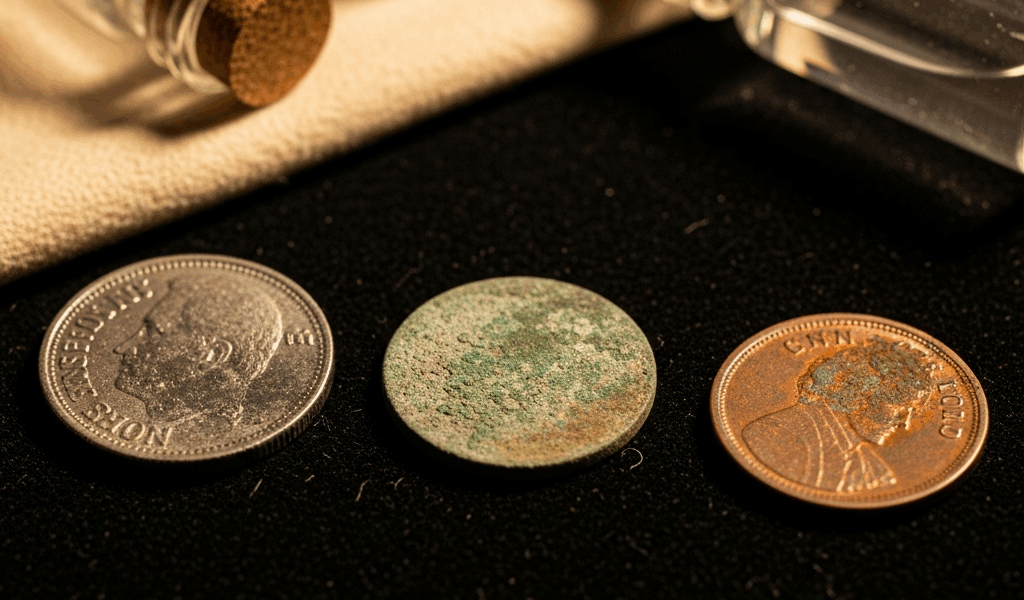
Here’s the core issue. Metal exposed to open air reacts with sulfur compounds and oxygen that occur naturally in the environment. Silver coins develop black silver sulfide. Copper oxidizes into cuprite and malachite, going green or dark brown depending on conditions. Before you cleaned that coin, it had spent decades — sometimes centuries — building up a protective patina. Ugly, sure. But functional. That layer was actively slowing down new tarnish formation.
You stripped it off. The raw metal underneath is now exposed and reactive, essentially starving for sulfur and oxygen. It blackens faster than it ever did before because nothing stands between the coin and the air anymore. This is why museum conservators don’t clean coins. Not snobbery. Metallurgy.
Silver Coins Turning Black After Cleaning
Silver is the worst offender here — the poster child for post-cleaning blackening. I’ve watched Walking Liberty halves go completely dark within a week of enthusiastic cleaning. Made this exact mistake myself with junk silver pulled from an estate sale in 2019. Fifty coins. One bad decision.
The culprit is silver sulfide, which forms when sulfur in the surrounding air reacts with freshly cleaned silver. But what most guides skip entirely: blackening speed depends almost entirely on what touches your coin after cleaning. That part matters more than the cleaning method itself.
- Rubber gloves. That chemical smell isn’t nothing — it’s sulfur off-gassing directly onto your coin. Cotton gloves only.
- Paper towels and cardboard flips. Many contain sulfur-based compounds from the manufacturing process. The bulk cardboard 2×2 holders sold to new collectors are notorious for this. I learned it the hard way with fifty coins stored in standard flips. Don’t make my mistake.
- Tap water. Residual minerals and chlorine compounds accelerate oxidation when a coin isn’t completely, thoroughly dried after rinsing.
- Ultrasonic cleaners. These strip patina entirely and leave micro-pitted surfaces — tiny grooves where tarnish settles faster than on smooth metal.
The fix is prevention-focused. Move cleaned silver immediately into anti-tarnish strips — Intercept Shield products run about $8–15 for a pack of fifty — or into Airtite capsule holders, which cost roughly $1–3 per capsule depending on coin size. These create a controlled microenvironment that starves tarnish of the sulfur compounds it needs. Store them somewhere cool and dry. Basements and attics are humidity nightmares. Climate-controlled rooms only.
If you’ve already got blackened silver, don’t panic yet. The coin isn’t ruined for collecting purposes unless you’ve caused physical surface damage. Tarnish is surface-level oxidation. It’s not corrosion eating into the metal from below.
Copper and Bronze Coins Going Dark or Mottled
Copper behaves like a difficult teenager. It wants to oxidize — aggressively, repeatedly, and seemingly out of spite. Cleaning removes the cuprite layer, that reddish-brown protective coating, and leaves the underlying copper completely exposed and eager to darken again.
The problem compounds if you’ve gone the vinegar-and-salt route, which is a popular method for pulling green patina off old pennies and large cents. These methods work. They work too well. They strip everything — including the stable oxidation layers that were protecting the coin from faster corrosion underneath. You’ll get spectacular results for roughly five days. Then the mottled blackening appears in patches.
There’s a reason some experienced collectors deliberately re-patinate copper coins using liver of sulfur, a chemical compound available from jewelry supply shops for around $10–15 a bottle. They’re not hiding damage. They’re engineering a stable, uniform oxidation layer that slows future tarnish. I’m apparently comfortable with chemical treatments at this point, and liver of sulfur works for me while vinegar-based methods never have. But I wouldn’t recommend jumping straight to that unless you already understand what you’re doing chemically.
The distinction worth keeping in mind: natural brown toning that develops slowly over decades is fundamentally different from ugly mottled blackening with uneven patches. That second thing means your storage environment is actively attacking the coin.
How Storage Choices Are Making It Worse
Probably should have opened with this section, honestly. Storage is where most collectors accidentally destroy the coins they just spent time cleaning.
PVC flips — those cheap plastic 2×2 holders that come by the thousand for about $15 a bag — off-gas plasticizers as they age. Those chemicals accelerate tarnish formation on both coin faces simultaneously. Upgrade to archival-quality holders immediately. Airtite capsules at $1–3 each work well for individual pieces. For larger collections, the Air-Tite holder trays with silica gel inserts run $20–40 per tray and maintain internal humidity below 30 percent — which is exactly where you want it.
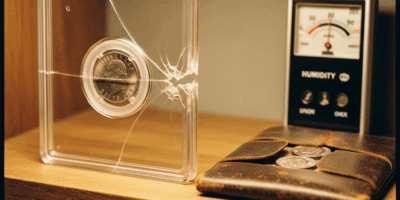
Humidity is the enemy that most beginners underestimate. A coin stored in a 60-percent humidity basement will tarnish measurably faster than an identical coin kept in a climate-controlled room at 45 percent. Silica gel packets — available at craft stores or online for $5–8 per bag — absorb ambient moisture and extend coin life significantly. Replace them every six months. Put a reminder in your phone right now.
After your initial cleaning, no household products touch the coin. No vinegar. No dish soap. No rubbing alcohol unless it’s pharmaceutical-grade and genuinely pure. Tap water contains minerals and chlorine. Distilled water is better. Reverse osmosis water is best — a gallon costs about $1 at most grocery stores.
Paper envelopes, tissue paper, and PVC-heavy sleeves are all asking for trouble. The paper contains sulfur compounds. PVC off-gasses plasticizers. Your freshly cleaned, vulnerable coin sitting in any of those materials is essentially marinating in the exact chemicals that cause blackening.
Can You Reverse Blackening Without Causing More Damage
Short answer: sometimes. But the cure usually costs more than the prevention would have. That was true in 1996 and it’s still true now.
For silver coins that have only recently blackened, the aluminum foil and baking soda method removes light tarnish without harsh chemicals. Place the coin on aluminum foil in a bowl of warm water with one tablespoon of baking soda. The chemical reaction pulls tarnish from the silver surface onto the foil instead — aluminum oxidizes preferentially, which is clever. It works. But understand: you’re cleaning the coin again, and repeated cleaning damages the surface over time. Any numismatist grading that coin later will notice.
For mottled copper coins, attempting to re-clean almost always makes things worse. You strip more protective layers, leaving the surface in worse shape than before you started. Once copper has gone mottled, accepting it and preventing the same problem on your other coins is genuinely the better move.
Here’s the honest truth — reversal is rarely worth it. Future prevention beats attempted damage control every single time. A cleaned coin stored properly will stabilize. The blackening stops once you remove the sulfur source and bring humidity under control. It won’t get shiny again. But it stops degrading, and that’s the actual goal.
Before cleaning any future finds, ask yourself one question: do I actually need to clean this coin, or do I just want to? Collectors value original patina — even dark patina. Dealers dock cleaned coins at grading. Metal detectorists and casual finders often don’t care about any of this, and that’s completely fine. Just make an informed choice before you start.
Move cleaned coins into Airtite holders or anti-tarnish capsules immediately after cleaning. Not tomorrow. Not after you photograph them. Immediately. The first 72 hours after cleaning are when the most damage happens.

Stay in the loop
Get the latest collectors coin corner updates delivered to your inbox.