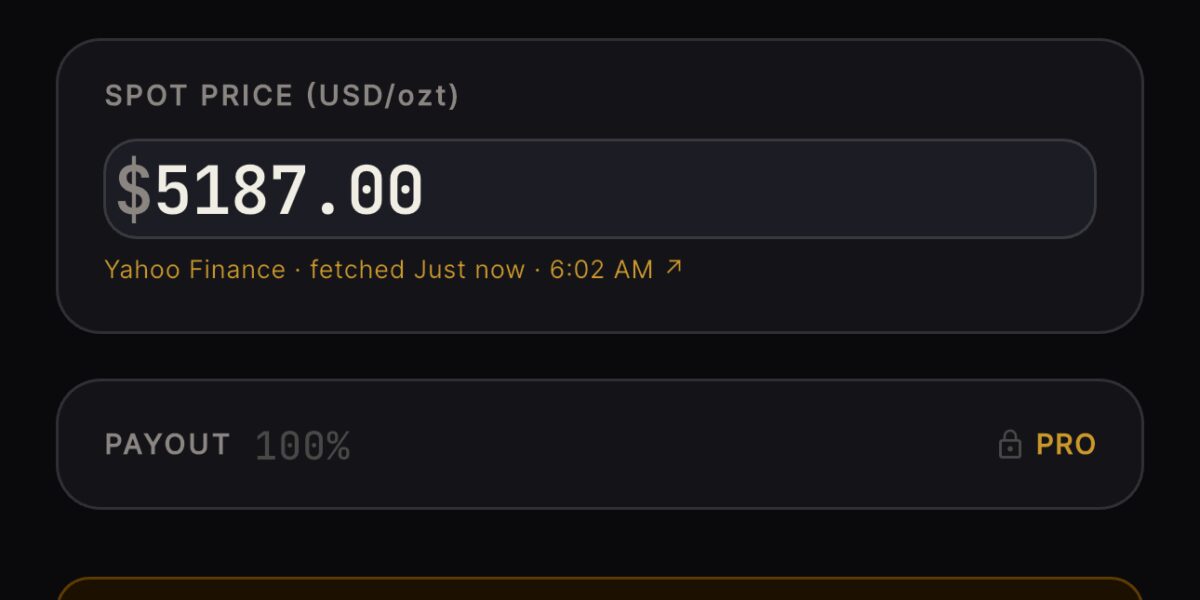
 Karat Pro— Gold CalculatorKarat Pro: Gold CalculatorLive spot price + karat + weight = melt value in seconds. Bring it to your next hunt.Download for iPhoneGet it on Google Play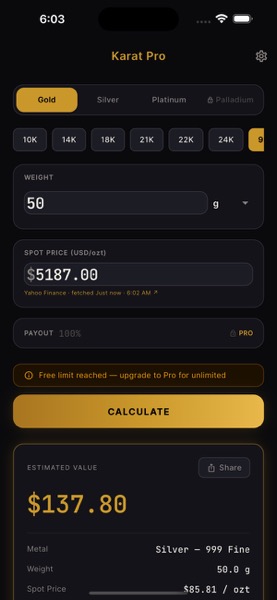
Anyone who’s been detecting for more than a season has stood over a freshly-recovered gold ring or chain wondering what they actually have. The detector confirmed metal. The visual check confirmed it isn’t junk. But is it 10K? 14K? 18K? And what’s it worth?
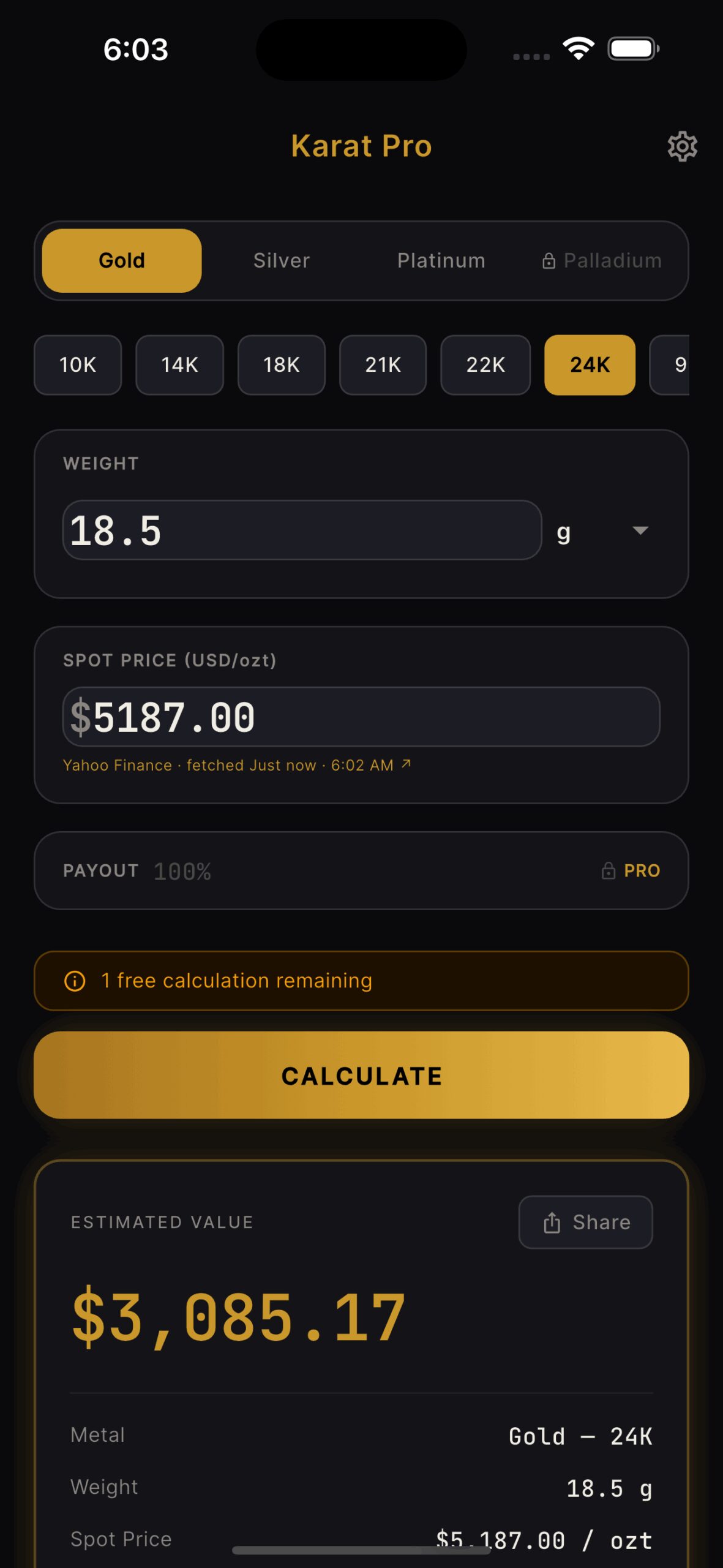
The traditional approach: bag it, go home, find a jewelry scale, look up the day’s spot price on a website, do the math. Twenty minutes of post-hunt work to evaluate something you could be deciding to keep or trade right now. Karat Pro is a mobile gold calculator built for exactly this situation — give it karat and weight, get a melt value against current spot in under ten seconds.
For metal detectorists, this is field intelligence that changes how you evaluate finds in the moment.
The Field Workflow With Karat Pro
Pattern that works for most detectorists:
- Recover the find. Clean dirt from it carefully.
- Look for hallmarks. Most gold has karat stamping (10K, 14K, 18K, 22K) in a discrete location — inside ring band, on chain clasp, near pendant loop.
- If hallmark is visible: open Karat Pro, refresh spot, weigh the piece on your pocket scale, enter karat and grams.
- Read the melt value. Compare to your sense of premium for that specific type of piece.
- Decide: keep, sell as scrap, hold for collector market, or research further.
The whole sequence takes about three minutes if your scale is in your pocket. Without a calculator app, the same evaluation requires bagging the find, going home, and doing the lookup work later — by which time you might have decided to sell the piece based on guess rather than math.
Common Detector Finds and Their Karat Math
Walking through field-typical scenarios:
Lost wedding bands. Most lost wedding bands are 14K (US standard) or 18K (European/luxury). A typical men’s 14K band weighs 6-10 grams. With spot gold around current levels, the melt math is roughly $200-$400 for a standard 14K men’s band. Add 10-15% premium if you’re selling to a buyer rather than refining.
Class rings. Often 10K gold to keep cost down. Heavier than wedding bands due to design — 15-25 grams typical. 10K melt: roughly $300-$500. Class rings sometimes have collector value (rare schools, vintage years) above melt; research the specific ring.
Chains and bracelets. Highly variable. Cheap costume chains are gold-plated brass — visually similar to real gold but melt-worthless. Real 10K-14K chains weigh substantially more than equivalent-looking costume jewelry. A 14K chain at 8 grams = roughly $300-$400 melt.
Loose stones in settings. When you recover a ring with a stone, the metal value is independent of the stone value. Calculate metal melt first, then research the stone separately. Often the stone is glass or a low-value gem — but occasionally it’s a real diamond or sapphire that increases the find’s value substantially.
Watch cases. Vintage gold watch cases were sometimes 14K or 18K. Heavier than expected — 30-50 grams of gold case material in some vintage pieces. Watch movement value is separate and usually more important than the case metal.
Where Detectorists Get the Karat Math Wrong
Common mistakes I see in detecting forums and at club meetings:
1. Assuming all gold-colored metal is gold. Most metal detectors flag yellow base metals (brass, bronze, gilded items) the same way they flag gold. Visual identification needs the karat hallmark or an acid test to confirm.
2. Misreading hallmarks. “14K” is real gold. “14KGE” (gold electroplate) and “14KGP” (gold plate) are NOT real gold. The “GE” or “GP” or “RGP” suffixes indicate plating — the underlying metal is brass or copper.
3. Confusing weight units. Jewelers use grams. The US sometimes uses pennyweight (1 dwt = 1.555 grams). Make sure your scale and your calculator use the same unit, or convert properly.
4. Trusting visual karat guesses. 10K, 14K, and 18K can look similar to the eye. The hallmark is the source of truth; if there’s no hallmark and you’re not certain, test with acid or get a jeweler to test it.
5. Forgetting the gold content vs. total weight distinction. 14K gold is 58.5% gold by weight. A 10-gram 14K piece contains 5.85 grams of actual gold. The calculator handles this conversion, but mental approximations often forget it.
GOLD CALCULATOR APPKarat Pro: Gold CalculatorIn-field melt math for detectoristsDownload for iPhoneGet it on Google PlayScale Recommendations for Detecting
Karat Pro needs accurate weight input. Three scale options that work for detectorists:
1. Jewelry-grade pocket scale (0.01g precision). $15-25 on Amazon. Pocket-sized, battery-powered, accurate enough for any gold find. Standard for serious detectorists. Brands like American Weigh Scales, Smart Weigh, and Brifit make affordable options.
2. Reloading scale (0.1g precision). If you reload ammunition, you may already have a scale capable of weighing in grams. Slightly less precision than jewelry scale but adequate for melt-math.
3. Postal scale (1g precision). Marginal for small jewelry. Adequate for larger pieces (15+ grams) but underestimates the melt value of small finds.
The investment in a $20 jewelry scale pays for itself the first time you accurately evaluate a 14K find that you might otherwise have sold for less than melt.
Sell to a Refiner vs. a Buyer
Once you know your find’s melt value, the next decision is how to convert it to cash. Three paths:
Refiner (direct). Send the piece to a refining service. They melt it, extract the gold, and pay you the spot price minus refining fees (typically 5-10%). Best for pieces with no numismatic or collector value. Net: ~90-95% of melt.
Jewelry buyer (local pawn or buyer). Walk-in buyer evaluates the piece, makes an offer. Their offer reflects melt minus their margin (typically 25-40%). Net: ~60-75% of melt. Convenient but less return.
Hold for collector market. If the piece has any aesthetic, vintage, or sentimental appeal (intact ring with maker’s mark, vintage watch, antique jewelry), it may sell for substantially above melt. Etsy, eBay, and specialty buyers pay premium for intact pieces. Risk: holding time and listing effort.
The melt calculation tells you the floor. Whether to sell at that floor or hold for collector market is a separate decision informed by the piece’s specifics.
The “Test Garden” Detector Practice
For detectorists serious about gold-detection technique, the “test garden” practice helps calibrate your detector and your evaluation skills. Bury known-karat pieces at known depths, hunt them, then evaluate as if found in the field. Compare your in-field estimate to the known value.
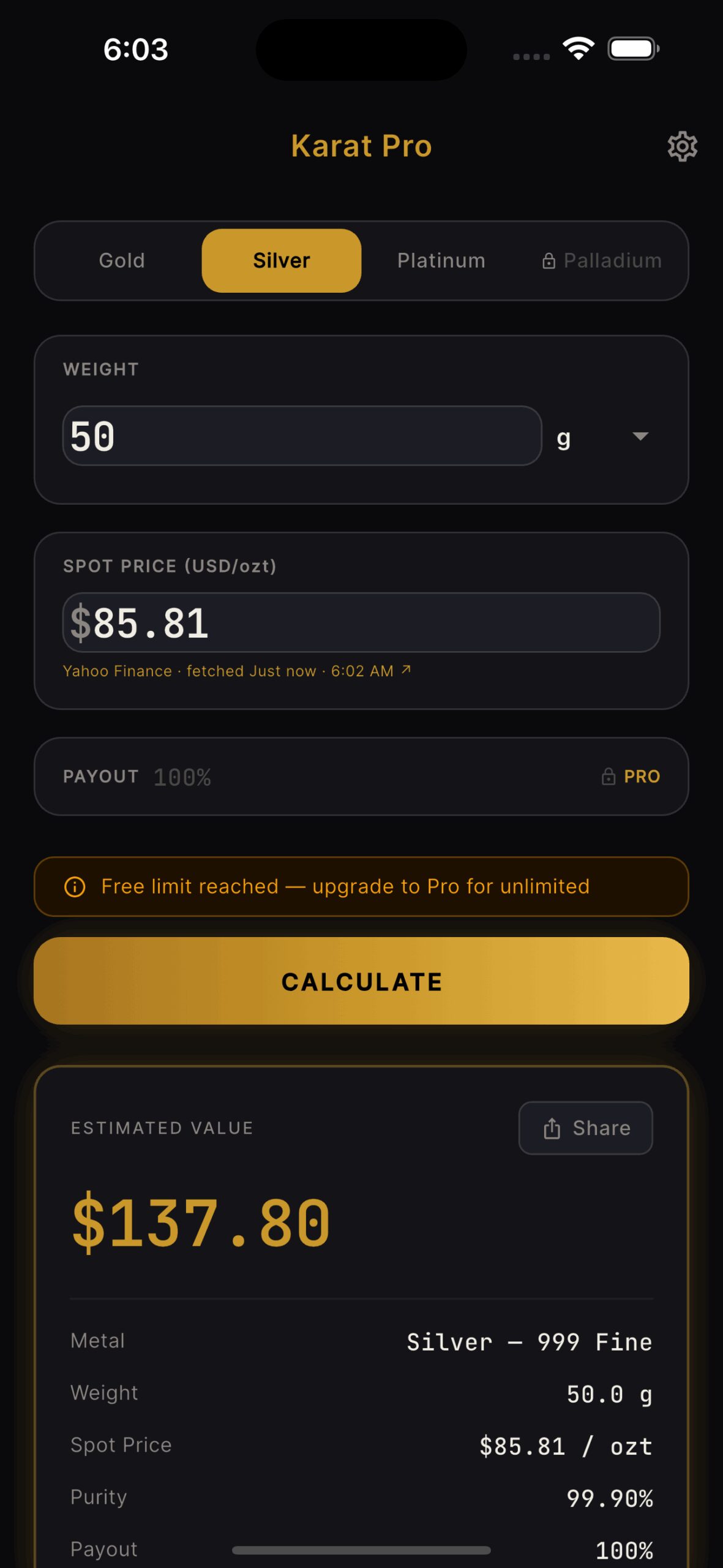
Karat Pro is useful here — it provides the “right answer” for the melt value while you train your visual karat-estimation skills against the hallmark-confirmed actual karat.
Most detectorists who do this for a season see meaningful improvement in their ability to estimate karat by sight and feel before reading the hallmark. The estimation skill matters for fast field evaluation when conditions don’t allow careful scale-and-calculator work.
For Hunting Specific Sites
Old swimming areas, beaches with lost jewelry history, school yards with class-ring losses — sites with known gold-loss patterns reward fast field evaluation. The Karat Pro workflow lets you decide in 3 minutes whether the piece you just recovered is worth $50 or $400 — which affects how thoroughly you sweep adjacent ground and how much time you commit to that specific area.
Detectorists who’ve used the app for a season describe it the same way: it changed the question from “did I find gold?” to “what’s this find worth?” — a question they can answer immediately rather than after coming home.
For the related coin-show evaluation use case, see the Karat Pro field test for coin collectors.
GOLD CALCULATOR APPKarat Pro: Gold CalculatorIn-pocket gold calculator. Works offline once spot is cached. Free.Download for iPhoneGet it on Google Play

Stay in the loop
Get the latest collectors coin corner updates delivered to your inbox.