Why Your Slabbed Coins Have Hairline Cracks Inside
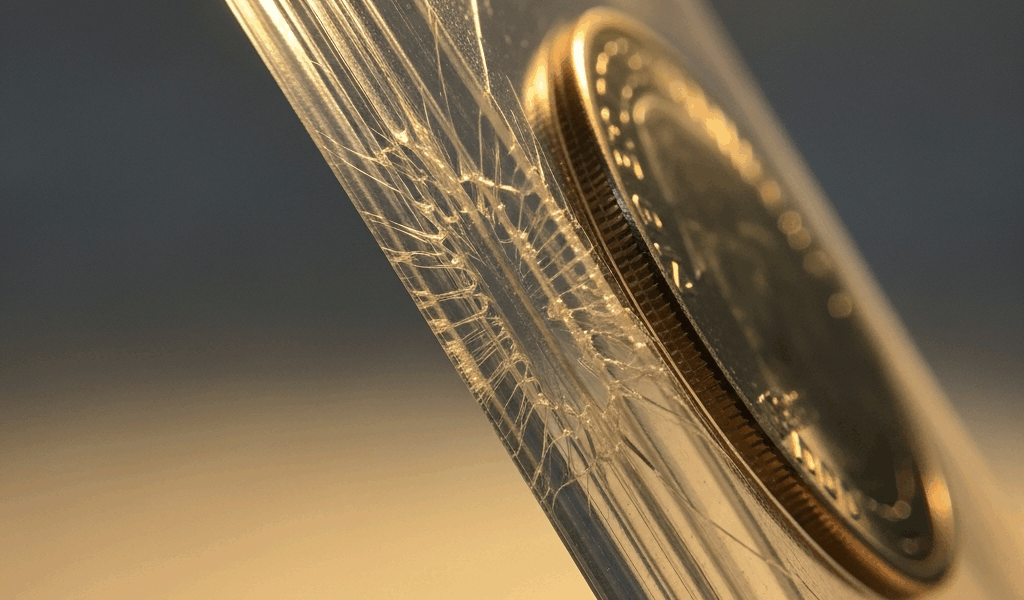
I’ve opened up my safe deposit box more times than I care to admit, only to find a hairline crack snaking across the inside of a slab holding a coin I paid good money for. The frustrating part? I knew I was storing it properly. The crack wasn’t my fault. As someone who’s spent the last eight years collecting certified coins and learning the hard way about slab degradation, I discovered that hairline cracks inside slabs are far more common than most collectors realize—and honestly, they’re almost never caused by something you did wrong.
Temperature cycling. Humidity stress. Manufacturing defects in the slab itself. Pressure during shipping. Then there’s the simple physics of how plastic and holder materials expand at completely different rates. Most of these issues happen silently, invisibly, until one afternoon you notice a thin white line running across your coin’s surface and your stomach drops.
Here’s what I wish I’d known earlier: you can’t unsee these cracks, and by the time you notice them, the damage is done. But you can learn to spot the warning signs before they become catastrophic. That’s what makes this information endearing to collectors who’ve already lost money to this problem.
What Causes Hairline Cracks to Form Inside Slabs
Temperature cycling is probably the biggest offender. Your slab sits in an Arizona garage at 95°F during the day. At night, it drops to 65°F. That’s a 30-degree swing. Do this daily for weeks, and the plastic capsule and the outer holder contract and expand at completely different rates. The plastic moves more aggressively than you’d expect. Stress builds up. Eventually, it fractures.
I learned this the hard way when I moved a collection from a climate-controlled apartment in Phoenix to an unheated storage unit. Within three months, three slabs developed visible hairline cracks. Should have invested in a temperature-stable storage box before shipping anything out of state — at least if I wanted to avoid this headache.
Humidity stress works similarly. When moisture levels spike, the plastic absorbs water and swells. The holder doesn’t budge. The mismatch creates internal tension that builds silently. Garages, basements, and attics are notorious for this kind of damage. If you live in a humid climate and your coins spend any time in non-climate-controlled spaces, you’re playing with fire.
Manufacturing defects in the slab itself account for more damage than collectors want to admit. Not every slab comes off the production line perfect. Tiny stress points in the plastic, uneven cooling during the molding process, or slight deformations create weak spots that eventually crack under the pressure of temperature and humidity cycles. You can’t control this. The grading company could have made the slab slightly thinner on one side, or the plastic injection temperature could have been off by a few degrees. That was their mistake, not yours.
Shipping pressure is brutal on slabs. I once received a box of coins with three slabs stacked directly on top of each other with nothing between them. The weight of the top two slabs compressed the bottom one hard enough to create a crack that ran from the rim to the center of the coin. The carrier didn’t drop the box. Gravity did the damage.
Transit temperature shock happens constantly. A shipment leaves a climate-controlled warehouse in New Jersey at 68°F, then sits in an unheated cargo plane or truck where temps plunge to 45°F. Then it arrives at your door in afternoon heat. That rapid swing can crack a slab within hours — sometimes even before you open the box.
How to Spot Cracks Before They Spread
Inspecting slabs properly requires specific technique. Most people hold the slab up to light and look straight through it. That’s backwards. Hairline cracks are almost invisible head-on. You need to angle the light.
Hold the slab at a 45-degree angle to a bright LED light source. Move it slowly across all four quadrants—obverse, reverse, and both edges. Hairline cracks usually catch the light and appear as thin white lines. They often cluster around the rim, where temperature stress concentrates. Rotate the slab and repeat from different angles. Spend at least two minutes per coin. It’s tedious, probably should have opened with this section, honestly.
Watch for other warning signs before the crack fully develops. Tiny hazing spots on the inside of the holder, small separations between the holder and the capsule, or microscopic white specks are all red flags. They mean stress is building. The crack hasn’t split yet, but it’s coming.
If you see a crack starting at a corner or edge, it’s usually a manufacturing defect. If it radiates from the center, temperature cycling probably caused it. The location tells you what went wrong.
I keep a small LED penlight in my inspection kit—the Coast A15 model, runs about $12—specifically for this task. The narrow beam makes cracks obvious. A standard flashlight spreads light too wide and washes out the crack details. Don’t make my mistake and try inspecting under regular overhead lighting.
When Temperature Changes Crack Your Slabs from Inside
The science is straightforward. Polystyrene and acrylic—the plastics used in coin slabs—expand and contract with temperature changes at roughly 0.07 to 0.08 millimeters per inch per degree Celsius. The outer holder material, usually a rigid plastic composite, expands at maybe 0.04 millimeters per inch per degree. They’re moving in the same direction but at different speeds. That differential movement creates shear stress. Eventually, something gives.
Real scenario that happened to me: high-grade Morgan dollar certified by a major grading company. The slab had been stored in a climate-controlled vault for two years. Perfect condition. I shipped it from Arizona to Minnesota in December. The package sat on a loading dock overnight where temps hit 15°F. Then inside a heated delivery truck at 75°F. Then inside my unheated garage at 55°F. That’s a 60-degree swing in 36 hours. The plastic capsule contracted sharply. The holder shrunk more slowly. Stress accumulated. A hairline crack formed along the coin’s edge.
Garage storage is a nightmare. Garages cycle temperature constantly. They’re also subject to humidity swings from 30% to 80% in a single week depending on weather and how often you open the door. These slabs weren’t designed for that environment. A climate-controlled cabinet in your home, a safe deposit box, or a proper storage vault is the only safe option for expensive coins.
Can You Fix a Cracked Slab or Regrade It
You can’t repair the crack itself. No amount of resin, adhesive, or polishing will seal a hairline crack running through the inside of a slab. The damage is structural. The coin’s protective barrier is compromised.
Your real option is resubmission and regrading. You crack open the old slab, clean the coin carefully, and send it back to the grading company or a competitor. They examine it, assign a new grade—usually dropping one or two points because of the crack risk or any associated damage—and slab it again in a fresh holder.
But here’s where the math gets painful. Resubmission costs anywhere from $25 to $75 per coin depending on the service level. If your coin dropped from MS65 to MS63 because of the crack, you just lost significant value. A coin worth $2,500 at MS65 might only fetch $1,200 at MS63. You paid $75 to regrade, and you lost $1,300 in value. Sometimes the math doesn’t work. If the coin is under $300 in value, regrading often costs more than the damage is worth.
Major grading companies will occasionally acknowledge manufacturing defects and reslab coins for free or reduced cost if the crack is clearly their fault. But you need proof — documentation, photos, everything. And even then, it’s a fight. I’ve had one coin accepted for free reslabbing in eight years. Most others, they denied liability.
How to Store and Ship Slabs to Prevent New Cracks
Storage temperature should stay between 55°F and 72°F year-round. No fluctuation beyond 5 degrees. That means climate-controlled home cabinet or safe deposit box. Unheated basements, attics, or garages don’t work. Freezing temperatures and heat spikes are your enemies.
Humidity control is equally critical. Keep it between 40% and 60%. Use silica gel packets in sealed storage boxes. Replace them every six months. A small hygrometer—$8 to $15 at any hardware store—lets you monitor conditions. I’m apparently obsessive about this and keep a ThermoPro model in my cabinet. It’s inexpensive and accurate enough for this purpose.
Spacing between slabs matters more than most people realize. Never stack slabs directly on top of each other. Weight plus pressure plus temperature changes equals cracked slabs. Use cardboard dividers or individual slots in a dedicated storage box. The PCGS Ultimate Slab Box costs about $40 and holds 20 slabs with individual compartments. Worth every dollar if you’ve got more than five coins.
Shipping requires padding and insulation. Wrap each slab individually in bubble wrap. Use at least two inches of foam padding on all sides inside the box. Ship in rigid boxes, not padded mailers. Include a note asking the carrier not to stack other packages on top. Use climate-controlled shipping during extreme temperature seasons—summer and winter. It costs more, but it beats replacing a cracked slab.
For valuable coins, insured ground shipping with signature required is safer than cutting costs with cheaper methods. A $15 upgrade for signature confirmation could save you thousands in damage.
The hardest lesson I learned: prevention is infinitely cheaper than dealing with cracked slabs after the fact. That extra $50 in proper storage and shipping? It’s an investment, not an expense.



Stay in the loop
Get the latest collectors coin corner updates delivered to your inbox.