“`html
Why Counterfeit Slabs Are a Growing Problem
Counterfeit slabbed coins hit the market more often than most collectors realize. I learned this the hard way about three years ago when I nearly purchased what I thought was a certified 1890-S Morgan dollar at a coin show in Denver. The slab looked legitimate at first glance — until a dealer friend asked to see my loupe and pointed out inconsistencies I’d completely missed.
Here’s what gets frustrating: the real issue isn’t that fakes are becoming more common because of market demand. It’s that modern counterfeiting technology has made it possible to replicate the physical slab with alarming accuracy. Someone with access to decent printing equipment and plastic injection molding can create a holder that passes a casual inspection. What makes this dangerous is that even seasoned collectors sometimes fall for it because they’re examining the coin inside rather than the container itself.
Catching a counterfeit before you hand over $500, $5,000, or more? That matters enormously. Authentication after purchase becomes a legal and financial nightmare you don’t want.
Check the Slab Dimensions and Weight First
Start with measurements. PSA slabs for regular-sized coins sit at approximately 2.75 inches wide by 3.75 inches tall, with a thickness of roughly 0.25 inches. PCGS uses nearly identical dimensions. NGC slabs are fractionally different — typically 2.8 inches by 3.9 inches with the same thickness tolerance.
Brought by a desire to avoid overpaying for counterfeits, I invested in digital calipers. The Mitutoyo model runs about $35 on Amazon. Now I measure every slab I buy in person before agreeing to a price. It’s become habit at this point.
Counterfeiters often source plastic from cheaper suppliers or use molds that aren’t perfectly calibrated to official specifications. The result? Thickness variations that jump out immediately. A fake might measure 0.28 inches instead of 0.25 inches. Width might be off by 2 to 3 millimeters. These aren’t huge deviations, but they’re consistent enough to flag concern every single time.
Weight matters too. A standard PSA slab weighs approximately 2.1 ounces without the coin. Thicker plastic or denser material used in counterfeits can push this to 2.3 or 2.4 ounces. A small scale under $20 catches this immediately. Why does this matter? Legitimate graders control their manufacturing to exact specifications. Counterfeiters cut corners here because precision tooling is expensive.
Examine the Label Printing and Font Quality
The label is where counterfeit detection becomes genuinely interesting. This is where I spend most of my inspection time because the label tells you almost everything.
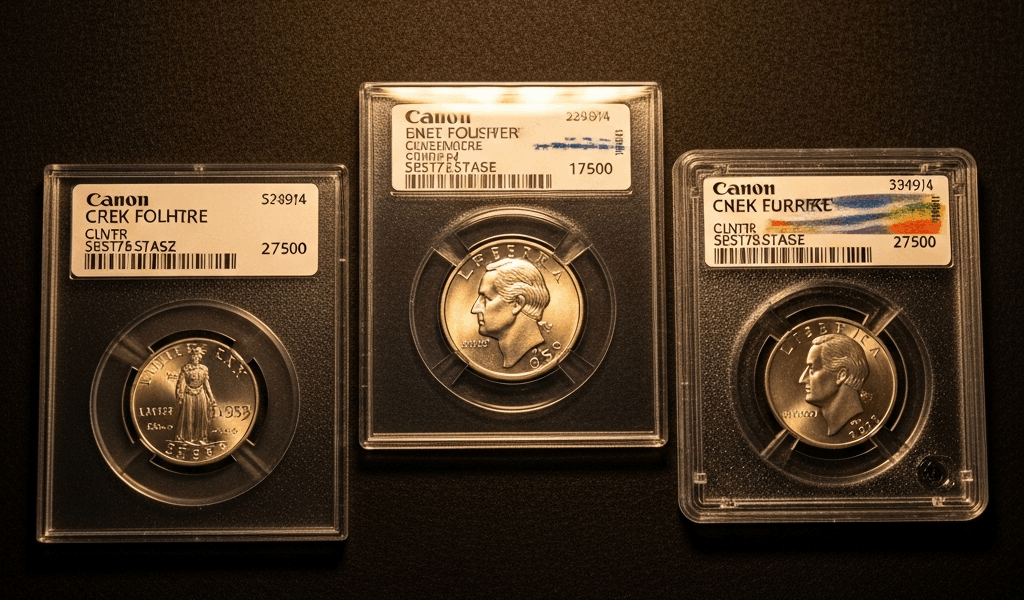
PSA labels should have crisp, clean typography. The company name, coin description, and grade number all use specific fonts that are razor-sharp under magnification. Zoom in on a high-resolution photo or use your loupe. If the letters appear blurry or fuzzy — that’s a red flag immediately. Counterfeiters often use lower-resolution printing or cheap inkjet methods that can’t match the sharpness of legitimate label printing.
Color accuracy is equally important. PSA’s signature blue label should be a specific pantone shade — rich and consistent across the entire label surface. Fakes sometimes use generic blue that’s slightly too light, too dark, or has an oddly greenish tint. NGC’s orange and green labels have the same precision. PCGS uses a distinctive yellow-gold and blue combination that’s unmistakable once you see it side-by-side with a fake.
The hologram placement deserves its own attention. Authentic PSA slabs feature a hologram in the upper right section of the label. It should sit at a consistent distance from the edge and be perfectly centered within a specific area. Counterfeiters either omit the hologram entirely or place it at slightly wrong coordinates. Compare against reference images from the grading company’s official documentation — you’ll spot the difference immediately.
Barcode clarity signals authenticity too. The barcode on the label should scan properly (if you have access to a barcode reader) and appear crisp with no pixelation. Blurry barcodes suggest someone photographed an existing label and printed a lower-resolution version.
Probably should have opened with this section, honestly — because once you understand label printing quality, you can eliminate 60% of counterfeits without touching the slab.
Check for spelling errors across all text. This sounds obvious, but counterfeiters working quickly sometimes copy labels with typos or grammatical mistakes. Legitimate graders proofread obsessively before labels hit production.
Look at the Coin Seat and Holder Integrity
Open your eyes to how the coin actually sits inside the holder. Authentic slabs position the coin in a precise capsule with minimal movement. When you tilt a legitimate slab gently side to side, the coin should not shift. The plastic seal around the edges should be uniform, with no visible gaps or loose areas where anything could slip through.
Counterfeit slabs often have sloppy coin placement. The coin might rattle slightly. You might notice air gaps between the coin and the plastic capsule — spaces where debris could have entered during manufacturing or storage. Sometimes the coin sits off-center, which never happens with legitimate grading company manufacturing.
The seal quality matters enormously. Authentic slabs use precise heat-sealing or ultrasonic welding that creates an airtight bond. You should not see any uneven seam lines, bubbling, or inconsistent pressure marks around the perimeter. Run your fingertip along the edge. It should feel smooth and consistent. Counterfeit seals sometimes feel rough, uneven, or have visible glue residue left behind.
Look for debris inside the slab. Dust, fibers, or small particles trapped inside suggest either improper handling or a counterfeit made in a non-sterile environment. Legitimate graders work in controlled facilities specifically designed to prevent contamination from entering the holder.
The plastic itself should be optically clear without yellowing, cloudiness, or discoloration. Lower-quality plastics used in counterfeits sometimes develop a slight haze, especially if stored improperly or exposed to light.
Verify Holder Consistency Against Known Examples
This is where your network of trusted references becomes invaluable. If you own authentic slabs from the same grading company and same time period, compare them directly. Place them side by side. Are the fonts identical? Do the labels have the same color saturation? Is the hologram positioned at the exact same distance from the edge?
Inconsistencies between your legitimate slab and the one you’re considering buying are warning signals. Counterfeiters sometimes source their molds and label templates from different fakes, creating a patchwork of incorrect specifications that doesn’t match real production standards.
Check for trim line alignment. The edges of the label should align perfectly with the edges of the plastic frame. Misaligned trim lines — where the label printing extends slightly beyond where it should — suggest sloppy production that legitimate companies never tolerate.
Spelling and capitalization must match exactly across multiple slabs from the same company. If one slab says “PCGS Certified Coin” and another says “PCGS Certified coin” with lowercase ‘c’, something is wrong. These standardized companies don’t have inconsistencies in their labeling.
Online forums like Collectors Universe and specialized Reddit communities (r/coins) have reference photo libraries built by years of collector experience. Snap a high-resolution picture of the slab you’re considering and post it. Experienced members spot counterfeits constantly and can often identify issues in seconds.
What to Do If You Suspect a Fake
Contact the grading company directly if anything feels off. PSA, NGC, and PCGS all maintain authentication hotlines and email contacts for exactly this reason. Provide them with photos and the slab’s certification number (if visible). They can verify whether that number actually belongs to the coin and slab you’re examining — it’s a service they take seriously.
Don’t accuse the seller of fraud at this stage. Many fakes enter the market through innocent secondary sales where the original buyer was also deceived. Keep communication factual: “I want to verify this certification with the company before purchase.” That’s all you need to say.
If you’ve already bought online, know your return window. Most reputable dealers offer 14 to 30 day inspection periods specifically for this reason. Document your slab with timestamped photos showing all angles, dimensions, label details, and the coin’s position inside. This protects you if a dispute arises later.
Consider submitting the slab directly to the grading company for re-authentication if the purchase price justifies it. PSA charges roughly $20 to $50 for verification services depending on turnaround time. This definitively answers the question and protects your investment going forward — no guesswork required.
If you’ve encountered a counterfeit, report it to the Better Business Bureau and the platform you used (eBay, Heritage Auctions, local coin show organizers). This information helps law enforcement track counterfeiting operations and protects other collectors from making the same mistake I nearly made.
“`

Stay in the loop
Get the latest collectors coin corner updates delivered to your inbox.