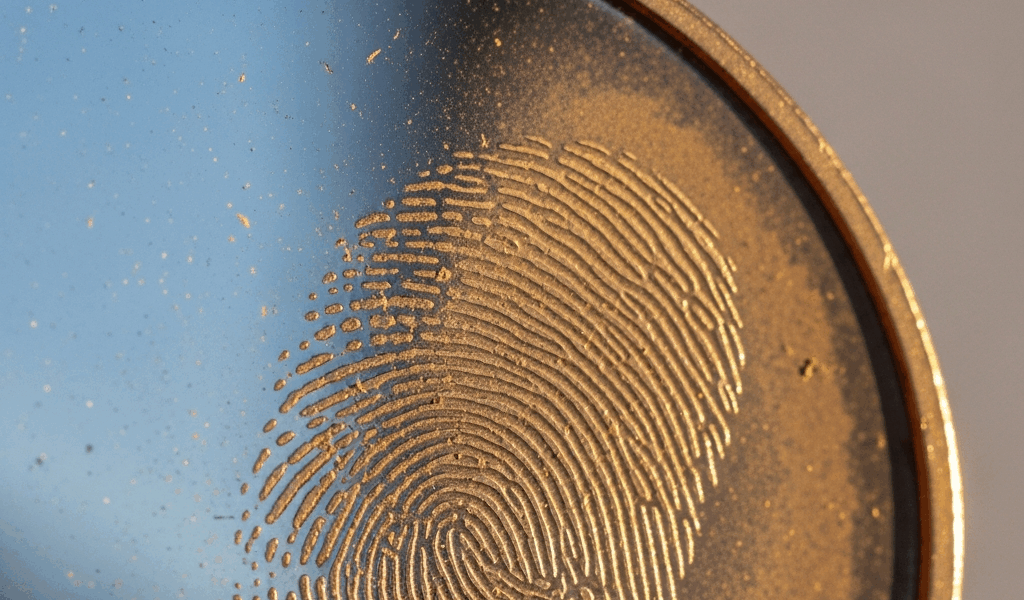
What a Degraded Proof Finish Actually Looks Like
Proof coin storage has gotten complicated with all the conflicting advice flying around. As someone who has watched a near-mint 1986-S proof half dollar develop milky haze inside a soft flip over eighteen months, I learned everything there is to know about what degradation actually looks like — and what causes it. Today, I will share it all with you.
But what is a proof finish, exactly? In essence, it’s two distinct surface qualities working together: deeply mirrored fields — the flat background areas — and frosted devices, meaning the raised portrait and design elements. But it’s much more than that. It’s a precision surface that took specialized die preparation and multiple strikes to achieve, and it degrades in very specific, recognizable ways.
Hairlines show up first. Thin, almost microscopic scratches that only appear when you catch light at a particular angle. Easy to miss until you can’t unsee them. Haze is different — it’s a broader dulling across the whole mirror surface, like someone breathed on a window and left it. Then there’s genuine cloudiness, which sits somewhere between haze and the worst outcome: milky spots. Those whitish, localized patches are usually from PVC off-gassing or chemical reactions inside the holder itself. They look almost decorative. They are not.
Here’s what I had to learn the hard way — hairlines are permanent. Full stop. No home treatment recovers that microscopic polish. Haze can sometimes be reduced through professional conservation, but the coin will never be exactly what it was. Milky spots? Often permanent too, depending on how deep the chemical reaction has eaten into the metal. Don’t make my mistake of assuming “light damage” means “fixable damage.”
The Most Common Reasons Proof Coins Go Dull
Bare fingers on proof surfaces. That’s number one. Your skin oils don’t just sit on top — they bond with the metal. Over months, those oils oxidize and leave permanent fingerprint patterns that catch light completely differently than the untouched mirror around them. This is the easiest cause to prevent, which makes it the most frustrating one to see happen.
Soft plastic flips are quietly destroying proof coins sitting in thousands of collections right now. These holders contain PVC — polyvinyl chloride — which breaks down over time and off-gasses hydrogen chloride. That gas settles onto the coin surface and reacts with the metal. A 1974-S proof sitting in a standard soft flip for decades can develop irreversible damage that looks disturbingly similar to corrosion.
Paper and cardboard envelopes sound harmless. They are not. Many contain sulfur compounds — original U.S. Mint packaging from the 1960s and 1970s often included sulfur-containing paper inserts. Stored in those envelopes, proof coins develop dark toning and hazing. You can’t see the reaction happening. It’s invisible until it isn’t.
Humidity swings are sneaky. Proofs stored in basements or attics experience temperature and moisture fluctuations that cause the metal to expand and contract at a microscopic level. Combined with any residual oils or chemical residue already on the surface, those cycles accelerate oxidation. A basement that swings from 35% relative humidity in winter to 75% in summer is actively working against your collection — every single day.
Probably should have opened with this section, honestly — but improper cleaning attempts account for an enormous share of proof damage among collectors who genuinely believed they were helping. One pass with a microfiber cloth. One dip in commercial coin cleaner. One “light polish” with a jewelry cloth. Any of those generates hairlines that catch every light source in the room and ruin the piece permanently.
How to Inspect Your Storage Setup for Hidden Damage Risks
Walk to wherever you keep your proofs right now. Not after you finish reading. Now.
Pick up each holder and identify the material. Soft plastic? Vinyl? Cardboard? Anything that isn’t hard inert polystyrene or a certified PCGS or NGC slab is a risk. Soft flips are suspect number one. Cardboard envelopes are suspect number two. Your coins may look perfectly fine today — they’re still on borrowed time.
Look for visible damage under a bright light, held at an angle. Cloudiness. Dulling. Discoloration. Spots. Photograph what you see. That baseline documentation matters if you need professional assessment later, and you want something to compare against in six months.
Now look at where you’re keeping them. A bedroom closet beats a basement every time. A temperature-stable cabinet with silica gel packets beats a bedroom closet. An attic or unheated garage is the worst possible scenario. Ideal storage runs between 60–70°F and 30–40% relative humidity. If your storage space swings wider than that — and most basements and attics do — you need environmental control, not just better holders.
Do a quick PVC test on any vintage holders: smell them. I’m apparently more sensitive to it than most people, and Intercept Shield works for me while PVC flips never smell like anything until suddenly they smell like vinegar and it’s too late. If a soft holder smells plasticky or faintly acidic, it’s off-gassing. Those coins need rehousing today.
Check your own habits too. Bare fingers on proof surfaces? Own it. Cotton gloves or edge-only handling becomes non-negotiable starting now.
What You Can and Cannot Fix at Home
So, without further ado, let’s be completely direct about this.
Hairlines cannot be restored at home. Milky spots usually cannot be restored at all. Haze might be reduced through professional conservation — emphasis on might. The coin will not be a perfect mirror again. That’s what makes proof coins so endearing to us collectors: the finish is genuinely singular, and it doesn’t come back once it’s gone.
For high-value proofs — anything above roughly $500 in market value, or pieces with significant numismatic importance — NGC and PCGS both offer professional conservation services. They have controlled environments and specialized expertise to assess and sometimes improve degraded surfaces without introducing new damage. Costs run approximately $75 to $300 per coin depending on service level. Worth every dollar for a piece worth several thousand.
For moderate-value proofs, professional conservation might cost more than the coin’s actual market value. That math doesn’t work. In that case, the best move is stabilizing the storage environment immediately and preventing further degradation. That’s the whole job now.
While you won’t need a professional coin conservation lab, you will need a handful of specific resources to handle this properly. Do not dip, polish, or clean proof surfaces yourself. Do not use Coin-Tite, Weiss Sonic cleaners, or any commercial cleaning solution on proofs — not once, not lightly, not briefly. Do not attempt to remove spots with cloth, cotton swabs, or soft brushes. Every one of those interventions creates damage that is irreversible.
How to Store Proof Coins So This Does Not Happen Again
First, you should rehouse everything into inert hard plastic holders immediately — at least if you have anything in soft flips, vinyl holders, or cardboard envelopes right now. PCGS slabs, NGC slabs, or archival-grade polystyrene flips are your three options. The soft flips and cardboard envelopes go in the trash. This single step stops the majority of ongoing chemical damage.
Intercept Shield packets might be the best humidity control option, as long-term proof storage requires stable moisture levels. That is because Intercept Shield works through active chemical neutralization rather than simple absorption — it captures reactive gases along with moisture, and it lasts longer than standard silica gel without requiring replacement. Silica gel works too, at roughly $8–12 for a pack of reusable packets, but it needs refreshing every six to twelve months. Either one belongs in your storage container starting today.
Store in a climate-controlled interior space. A bedroom closet. A cabinet inside your home. A safe — a quality fire-resistant safe like a Stack-On or Cannon model also happens to stabilize internal temperature reasonably well. Not a garage. Not an attic. Temperature between 60–70°F year-round, humidity between 30–40% relative humidity. Those numbers matter.
Handle proof coins only with clean cotton gloves or by gripping the very edge — never the flat fields, never the devices. Bare skin contact is how collections degrade quietly over years while their owners wonder what happened.
Three actions, starting today: move your proofs out of soft holders into inert hard plastic, place humidity control packets in whatever container houses them, and put a pair of $4 cotton gloves next to wherever you store the collection. That combination stops most of the degradation happening right now — and protects everything you still have left to protect.


Stay in the loop
Get the latest collectors coin corner updates delivered to your inbox.